Supreme Day Matka Explained: Rules, Formats, and Common Terms
Understand Supreme Day Matka with a clear explanation of its basic rules, result formats, and commonly used matka terms for general awareness and information.

Supreme Day Matka is a commonly followed matka market that attracts attention due to its regular result schedule and structured format. While many people check daily results, not everyone clearly understands the basic rules, result formats, and terminology associated with this market.
This article provides a simple and informative explanation of supreme day matka, helping readers understand how it works, how results are presented, and what common matka terms mean—strictly for awareness and educational purposes.
What Is Supreme Day Matka?
Supreme Day Matka is a day-based matka market where results are announced once daily at a fixed time. Like other matka markets, it follows a numerical system, and results are published publicly on charts and result boards.
People usually follow Supreme Day Matka to:
-
Check daily results
-
View updated charts
-
Understand historical number records
-
Learn about market formats
Each day’s result is independent and not connected to previous outcomes.
Basic Rules of Supreme Day Matka
While rules can vary slightly across platforms, the general structure remains consistent:
-
Results are released once per day
-
A fixed numerical format is followed
-
Results are final once published
-
Charts are updated after result declaration
-
No changes are made to past results
These rules ensure consistency and transparency in result display.
Understanding Supreme Day Matka Result Formats
Result formats help users read and understand published outcomes easily. Supreme Day Matka typically follows common matka number formats.
Single Digit
A single digit number derived from the result calculation process.
Jodi (Pair)
A two-digit combination formed by joining two single digits.
Patti / Panel
A three-digit number that represents a detailed result format.
Open and Close (if applicable)
Some matka markets show open and close digits, while others display only final outcomes.
These formats are used only for result representation, not prediction.
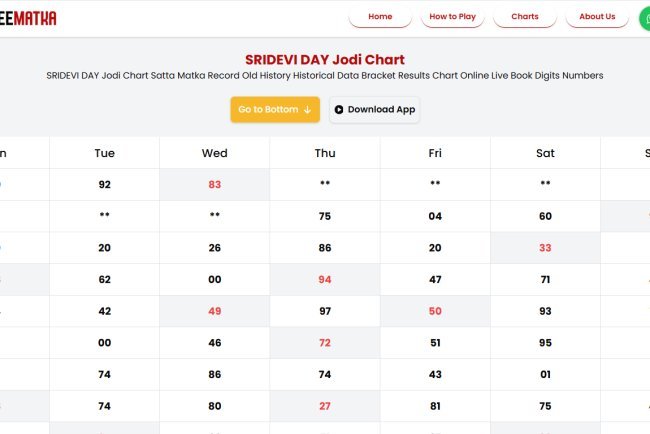
How Supreme Day Charts Are Structured
Charts display past results in an organized manner. A typical Supreme Day chart includes:
-
Date-wise results
-
Daily number formats
-
Weekly or monthly sequences
-
Historical records
Charts help users track outcomes over time and understand result flow visually.
Common Terms Used in Supreme Day Matka
Understanding terminology makes matka content easier to follow. Some commonly used terms include:
-
Market – The specific matka game (Supreme Day)
-
Result – The official daily declared number
-
Chart – A table showing past results
-
Jodi – A two-digit number pair
-
Patti / Panel – A three-digit number
-
Single – A single-digit result
-
Time – The scheduled result declaration time
These terms are widely used across matka-related platforms.
Why Formats and Terms Matter
Understanding rules, formats, and terms helps readers:
-
Avoid confusion while checking results
-
Read charts accurately
-
Distinguish official data from rumors
-
Follow matka-related information responsibly
Clear knowledge reduces misunderstandings and misinformation.
Important Misconceptions to Avoid
It’s important to note that:
-
Knowing formats does not influence outcomes
-
Charts do not predict future results
-
Past numbers do not control upcoming results
Supreme Day Matka outcomes are independent and should be viewed only as records.
Responsible Awareness
Information related to Supreme Day Matka should be consumed responsibly. Rules, formats, and terms are best understood for:
-
General knowledge
-
Educational reference
-
Content awareness
Avoid treating informational content as guidance for participation or decision-making.
Conclusion
Supreme Day Matka follows a structured system of rules, result formats, and commonly used terms that make daily outcomes easy to understand and track. By learning these basics, readers can interpret results and charts more clearly and responsibly.
A proper understanding of terminology and formats ensures that matka-related information remains informative rather than misleading.
What's Your Reaction?